Expected Sale Price: what a listed home will actually close for
For a home that is on the market, Resideline now shows an Expected Sale Price.
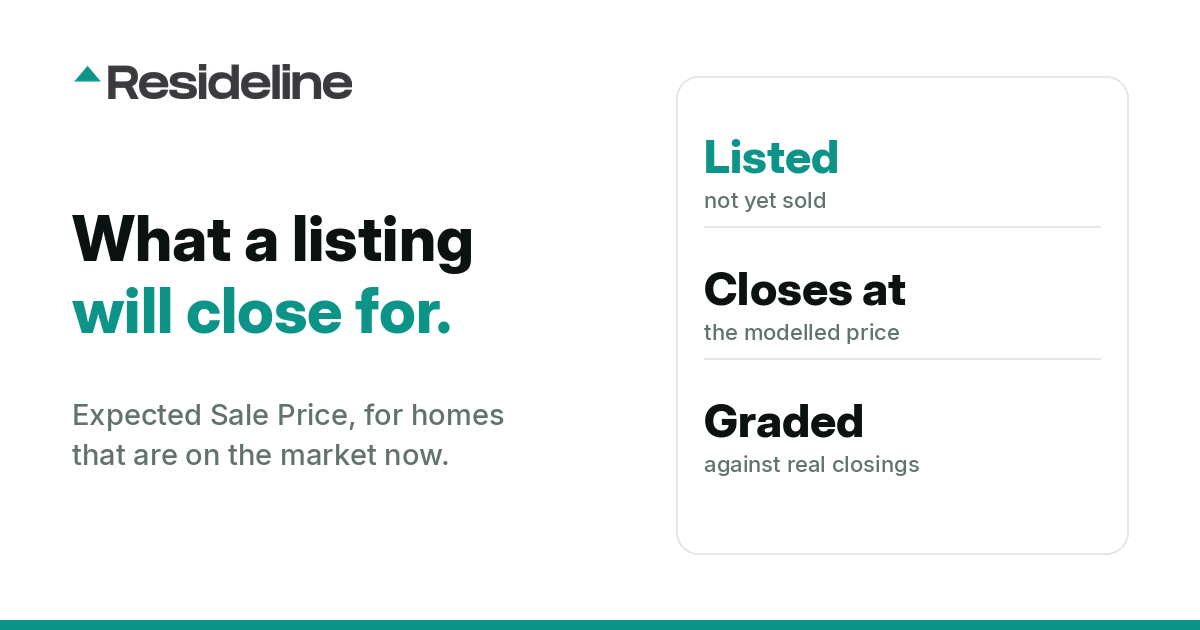
Comps tell you what similar homes sold for. They do not tell you what this specific listed home will close for. Those are different questions, and for a property that is on the market right now, the second one is the one you are actually asking. Resideline now answers it directly. On any listed property, the report shows an Expected Sale Price next to the comp-based value.
Why a listing needs its own number
A comp-based value is built from other homes. It is the right tool when nothing better exists. But once a home is listed, you have something better: the listing itself. The Expected Sale Price is anchored on those signals. That anchoring is why it is our most accurate figure for on-market homes, and it is the number to lead with when you are deciding what to offer on something that is for sale today.
Reading it next to the Estimated Value
The two numbers work together:
- •Estimated Value is comp-based. It answers "what have similar homes sold for."
- •Expected Sale Price is listing-anchored. It answers "what will this one close at."
When they agree, you have strong confirmation. When they diverge, that gap is the signal. A home listed well below its expected sale price is a potential deal, and the report flags exactly that. When comp support is thin, the report leads with the Expected Sale Price so the headline stays reliable instead of leaning on comps that are not there.
Why we can make this claim
Every Resideline estimate is frozen while the home is still for sale, then graded against the actual closing price after it sells. Right now the public scoreboard shows 3.60% median error across 26,522+ graded closings, built from 747,000+ frozen predictions across 37 states. The Expected Sale Price is validated against real closings the same way, which is why we are comfortable telling you to lead with it on a live listing. If you want the full argument for why a public error rate is the only claim worth trusting, read why accuracy receipts matter. On the deals where they split, you are looking at either a mispriced listing or a reason to dig deeper. Both are useful.
Frequently Asked Questions
What is the Expected Sale Price?
It is shown alongside the comp-based Estimated Value on any on-market property.
How is it different from the Estimated Value?
The Estimated Value is comp-based, built from similar homes that sold. The Expected Sale Price is listing-anchored, built from signals tied to this exact address. On a live listing the Expected Sale Price is the more accurate figure.
How accurate is it?
Resideline freezes every estimate while a home is for sale and grades it against the real closing price. The public scoreboard shows 3.60% median error across 26,522+ graded closings.
Check the evidence behind your property’s value.
Create a free account to inspect comps and the assumptions behind your property’s estimated value.
Create a free account3 free reports at signup. No card required.