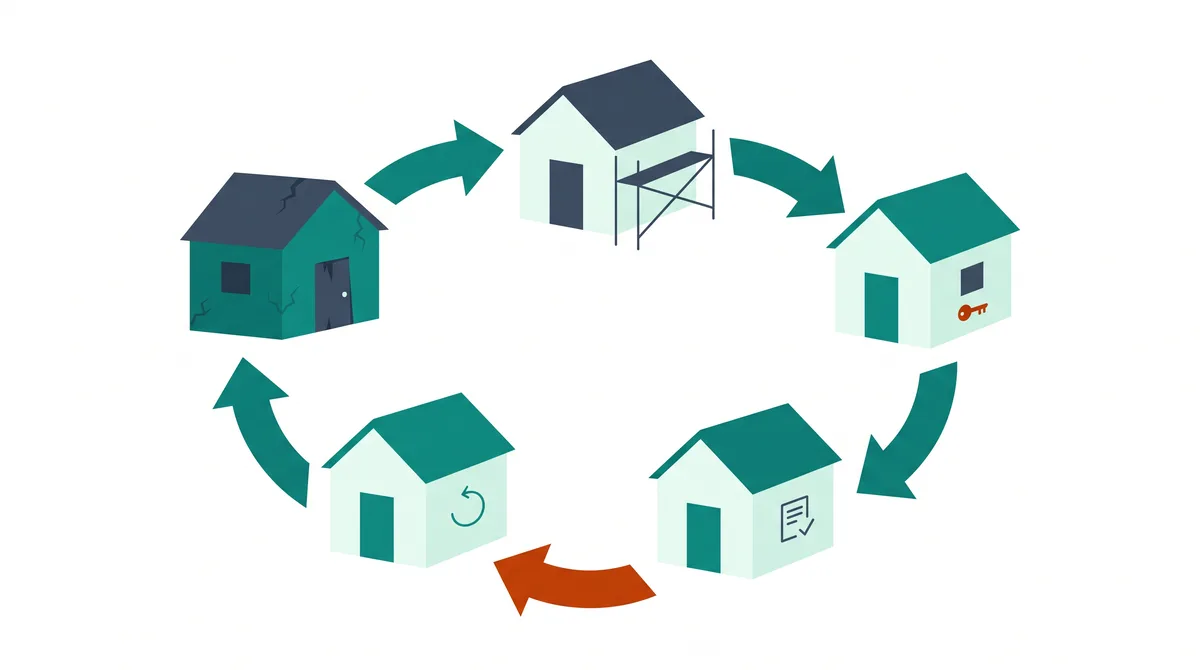
Tracking Your Portfolio and Deal Pipeline
The property is the record, not the person. Two views, portfolio and pipeline, and why dead deals are your best list.

Once more than a couple of deals are moving, the constraint stops being analysis and becomes memory: what did we offer, on which address, when, and what were we assuming?
A normal sales CRM cannot hold that. It is built for a rep walking one contact through stages toward one close, and investing does not look like that. The property has to be the record, not the person.
Why the person cannot be the record
One property can have three heirs on the deed. One seller can own four properties. The offer you made in March can come back in September at your number, and a person-shaped database has nowhere to put any of that.
| Question | Sales CRM | Property-first CRM |
|---|---|---|
| The record | The contact | The address |
| The shape | One contact, one close | Many people on one property, one person on many |
| A lost deal | Archived | Moved to the follow-up list |
| The memory | Notes on a person | The analysis: offer, repairs, ARV, date |
View one: portfolio
What you already own, one row per property: current value, the debt against it, and what it rents for. The point is seeing equity without maintaining a spreadsheet.
Values drift up while loans amortize down, and the sum of those spreads across the portfolio is your real balance sheet. That number decides when you can refinance, borrow against a property, or sell into your next purchase.
View two: pipeline
Everything in motion (offers out, under contract, closed), organized by address, not by person. Each property record holds the analysis it was born from, so when a deal resurfaces months later you re-open a record instead of re-doing an analysis.
What you offered
The actual number you put on the table, at the discipline you held that day.
What you assumed for repairs
The scope and cost behind the offer, so you can tell what has changed when the deal comes back.
What ARV you used
The exit value the whole number was built on.
The date
So the September callback lands on the March offer instead of on a blank page.
Dead deals are your best list
A sales CRM gets this exactly backward: it archives lost deals. A rejected offer at a disciplined number is not a loss, it is a follow-up. Burying it throws away the only prospect list where every entry has already told you they own property and what number they rejected.
Sellers who said no in March get divorced, inherit, tire of tenants, or watch the market soften. When they call back, the investor who still has the offer, the repair assumptions, and the date wins the deal at the old discipline instead of re-negotiating from scratch.
Put your current properties into the portfolio view and your active offers into the pipeline, including every dead deal from the last year. That last part is the habit that pays: the follow-up list builds itself from the deals you already worked.
Put this lesson to work on a live address.
Open the investor CRM